


 Mother Nature is a great teacher and getting kids outside to learn and play is good for their brains and their bodies.
Contact with nature is more essential today given that children are spending nearly 8 hours a day using entertainment media and only 6 percent of children ages 9-13 play outside on their own. We are at risk of losing an entire generation’s appreciation for how nature works and what it needs to remain healthy and productive.
For 40 years, Project Learning Tree has been taking kids outside to learn.
How?
- By providing educators with the tools, training and resources they need to bring the environment into their classrooms, and their students into the environment.
- By adapting its activities for families to use with children, to help them get outdoors to experience nature and learn about trees and forests.
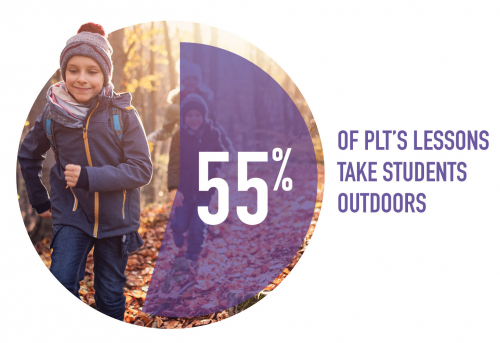
Each year, 20,000 educators attend PLT workshops around the nation to learn how to integrate PLT into lesson plans for all grades and subject areas, and make outdoor experiences part of their students’ learning experience.
For example:
- Over half the 96 activities in PLT’s PreK-8 Environmental Education Activity Guide take students outdoors.
- PLT’s secondary module Exploring Environmental Issues: Focus on Forests gets high school students outside exploring forests in their own communities.
- PLT’s Environmental Experiences for Early Childhood engages children ages 3 to 6 in outdoor exploration and play.
Why?
- Because PLT works. PLT is thoroughly tested to assure students learn from our activities. Not just about the environment, but across the entire curriculum.
- Because we teach students how to think, not what to think about environmental issues.
Community action components of many activities involve efforts to make school grounds more green or enhance wildlife habitat. Through GreenWorks! and GreenSchools, PLT’s service-learning initiatives, PLT provides grants to educators who take their students outside where they can learn about their environment, and work to improve it.
Studies show that curriculums with an outdoor learning component drastically improve overall student performance, particularly in science and math, including test scores.
Here’s What You Can Do
- If you are a teacher, check out
- If you are a parent or grandparent, check out our
“Fresh air, exercise, and creative exploration are just a few of the benefits children can experience when they spend time outdoors. Encouraging children to be active while outdoors is important for their physical, cognitive, and social development. By fostering more opportunities for outdoor learning, we will help the next generation grow and develop as they build an appreciation for nature at an early age.”
Dr. Courtney Crim, Assistant Professor, School of Education
Trinity University, San Antonio, Texas