

Students use forest products every day, from books and pizza boxes to tissues and furniture. But they rarely stop to wonder whether that forest product comes from a responsibly managed forest.
Forests provide habitat for wildlife, protect water quality, store carbon, and offer places for people to learn, work, and play. They also provide renewable materials that are used in countless products we encounter every day.
Helping students understand the connection between the products they use with the natural resources needed for their production is an important part of advancing sustainability, and forest certification labels can provide a tangible way to explore it!
Growing Healthy Forests for Tomorrow
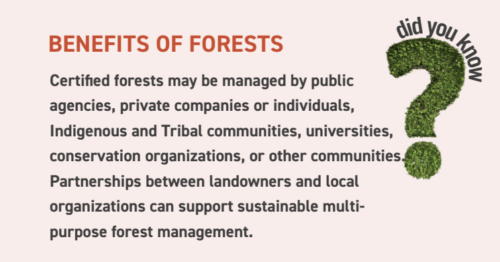
Forest certification programs such as the Sustainable Forestry Initiative (SFI) establish standards for responsible forest management. These standards address a range of environmental, social, and economic considerations and provide a framework for making responsible choices that help protect water quality, conserve biodiversity, and support the needs of communities today and in the future. By requiring sustainable forest management, conservation, and community engagement, SFI supports resilient forests that continue to provide benefits for people, wildlife, and the planet.
What’s in a Label
You may have spotted the SFI label while grabbing groceries, ordering takeout from your local restaurant, or passing by a new building in your community. It’s found on many of the products we use every day, and that little label tells a big story.
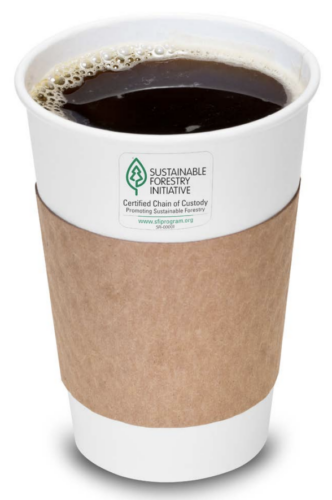 Every forest product has a journey, and an important component in forest certification is tracking the certified forest material from forest management through manufacturing of the product. That way, when you buy a product with a forest product certification label, you can be sure that it comes from responsible sources. Its unique identification number allows people to learn more about the organizations behind certified products. The SFI label represents a shared commitment to responsible forest stewardship. Behind each label are forest managers, conservation leaders, manufacturers, and countless others who help keep forests healthy, productive, and resilient for generations to come.
For students, the idea can start with a simple question: do the forest products that we use come from sustainably managed forests?
Project Learning Tree’s What’s in a Label? activity for middle school students provides opportunities for learners to grow their forest literacy by exploring what forest product certification is and how it benefits both the environment and the communities that rely on forests. Learning to recognize labels students encourages them to ask questions, investigate environmental claims, and think critically about the products they use.
Ready to explore? Download the What’s in a Label? activity and give your learners the opportunity to investigate what’s behind the labels and what they can tell us about forests.
About SFI
Project Learning Tree is an education program of SFI, a nonprofit organization committed to advancing sustainability through forests, conservation, community, and education. SFI believes healthy, resilient forests are essential to our collective future and work with a diverse network of educators, communities, Indigenous Peoples, conservation organizations, resource professionals, governments, universities, and forest sector partners to address local and global sustainability challenges.
Through education and collaboration, PLT helps inspire the next generation of environmental leaders while fostering a deeper understanding of the many benefits forests provide. As North America’s largest forest certification system, SFI promotes responsible forest stewardship through standards that support sustainable forest management, conservation, and community engagement. Together, SFI and PLT help ensure forests continue to provide benefits for people, wildlife, and the planet for generations to come.